An abscess has to be drained before any of this is worth discussing. Choosing between operations comes afterwards, once the inflammation has settled.
The five, in plain terms
Wide excision, left open to heal
The whole diseased block is cut out down to the fascia and the wound fills in from the base upwards. Dependable and definitive. Also about two months of healing on average, with a reported range from four weeks to six months, and somebody changing dressings throughout. It comes back in 8 to 21 out of every 100.
Excision with the wound stitched down the middle
Neater in theory, worse in practice. Healing fails in around 16 per cent, and recurrence has been reported as high as 38. A midline scar sits exactly where friction, sweat and hair converge, which is the whole problem in the first place. Most of us stopped doing this years ago.
Off-midline flap operations
Karydakis, the cleft lift, Limberg. The crease is flattened and the scar moved to one side. These have the best long-term record of anything available, around 1.3 per cent for Karydakis and 3.3 for cleft closure, and the modern large cleft-lift series sit in similar territory. The price is a larger incision, tissue moved about, a longer visible scar and a bigger operation to get over.
Pit picking
Bascom's original operation. Only the midline pits are removed, and the cavity is drained through a small incision off to the side. Quick, minimal, and in his original series healing inside three weeks with about 8 per cent recurrence. What it does not do is treat the lining of the tunnel, which is where the disease actually lives.
Laser closure
A radial fibre destroys the tunnel's lining from inside so it collapses and seals, often after the tunnel has been cleaned out under a fine telescope. Very little tissue removed and no large wound. The best individual series report healing in 17 to 20 days and recurrence of 3.6 per cent at six months; the 2026 review that pooled everything published found nearer 30 days and 9 to 11 per cent. Both figures belong in the picture.
Side by side
| Operation | Healing | Comes back in | Scar |
|---|---|---|---|
| Laser closure | 17–20 days in the best series, about 30 pooled | 9–11 per 100 pooled | a few millimetres |
| Wide excision, open | about two months | 8–21 per 100 | broad, down the middle |
| Stitched down the middle | weeks, if it holds | up to 38 per 100 | a line down the crease |
| Off-midline flap | two to four weeks | 1–3 per 100 | longer, off to one side |
| Pit picking | about three weeks | about 8 per 100 | barely anything |
A word about how to read that table, because it matters more than the numbers in it. These figures come from different studies, in different countries, done by different surgeons, and followed for very different lengths of time. Pilonidal disease returns late rather than early, so anything followed for six months will always look better than something followed for five years. Treat the table as indicative. It is not a league table, and I would be misleading you if I presented it as one.
What actually decides it
How much disease is there
Discrete tunnels that can be entered, cleaned and sealed suit laser well. Broad cavities, or tissue heavily scarred by previous operations, usually do better with a flap, which takes out the whole diseased field rather than treating a tunnel.
Is this your first operation, or your third
A first-time chronic sinus has the widest choice of sensible options. After two or three failed attempts the anatomy is distorted, the planes are scarred, and a definitive flap starts to look a great deal more attractive.
Is it infected right now
An abscess must be drained first. Operating through actively infected tissue invites failure. But draining and stopping there is not a cure either: up to 85 out of 100 people treated that way need further surgery later.
How much time you can afford to lose
This is not a vanity consideration, whatever anybody tells you. It is arithmetic. For a man who drives his own truck, or a student sitting exams, or somebody who opens their own shop six days a week, two months of restricted activity has real consequences at home. One published laser series recorded 92 per cent of patients back at work within a day. That is the strongest single argument for the technique, and I say so plainly.
What happens if it fails
Worth thinking about before rather than after. Laser removes so little tissue that a failed attempt leaves everything else open to you: another laser procedure, or a flap. A failed flap leaves fewer choices. Starting with the least destructive operation that will genuinely do the job is a reasonable strategy, with the emphasis on genuinely.
A surgeon who performs only one of these operations can only ever recommend one of them.
The bit that matters more than the operation
Whichever one you have, the mechanism that caused the disease does not disappear afterwards. Thick body hair roughly triples baseline risk, and the hairs are still there.
What to do about that is less settled than most clinic pages let on. The 2019 American guideline says hair removal may be used, on low-quality evidence. The 2024 European guideline concluded it is not necessary to reduce recurrence. Of the available methods, laser hair reduction has the better evidence behind it, and repeated razor shaving of the healed area has been linked with more recurrence rather than less. I would ask your own surgeon what they advise for what they found in you.
Weight, sitting and washing all matter too, and unlike the choice of operation they are within your control. Being overweight roughly doubles the risk, obesity a little more, and bathing twice a week or less is associated with more than three times the risk.
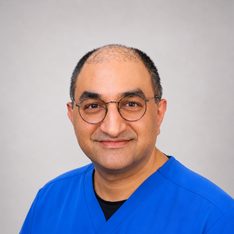
About the author
Prof. (Dr.) Ashvind Bawa, MS, FACS, is Director of Surgical Services at Bawa Hospital & Hernia Institute in Ludhiana, where he practises general and laparoscopic surgery. He writes these guides himself and reviews them at least once a year.
- The lump near your tailbone that nobody talks aboutWhat a pilonidal sinus is, why it happened to you, and what laser treatment involves
- What this operation costs, and why nobody will give you one numberThe nine things that move the price, and the insurance clause that catches people
- The three weeks after your pilonidal operationSitting, driving, the gym, and the six signs that mean pick up the phone
- Dessily M, et al. The SiLaC procedure for pilonidal sinus disease. Techniques in Coloproctology 2019;23(12):1133–1140.
- SiLaC with EPSiT: early outcomes of laser-endoscopic therapy. Frontiers in Surgery, 2025.
- Laser-assisted treatment of pilonidal sinus disease: a systematic review and meta-analysis. Langenbeck's Archives of Surgery, 2026.
- American Society of Colon and Rectal Surgeons. Clinical practice guidelines for the management of pilonidal disease. Diseases of the Colon & Rectum, 2019.
- European Society of Coloproctology guideline on the management of pilonidal disease. British Journal of Surgery, 2024.
- Petersen S, et al. Long-term effects of postoperative razor epilation. Diseases of the Colon & Rectum, 2009.
- Excision, midline closure, flap and pit-picking outcomes: Pilonidal disease, treatment. Medscape Reference.
The outcome figures on this page come from studies conducted in different settings with different follow-up periods and are not directly comparable with one another. They describe groups of patients and cannot predict what will happen to any individual. This page is general information and does not replace being examined.