
A hernia is a common medical condition that occurs when an internal organ or tissue pushes through a weak spot in the muscle wall. Many people delay treatment due to fear of surgery, pain, or long recovery. However, with modern medical advancements, laparoscopic hernia surgery has made hernia treatment safer, faster, and far more comfortable for patients.
At Bawa Hospital, we specialize in advanced laparoscopic procedures that allow patients to return to their normal lives quickly and safely. This article explains laparoscopic hernia surgery in simple terms, so you can make an informed decision with confidence.
What Is a Hernia?
A hernia occurs when part of an internal organ—usually the intestine—bulges through a weak area in the abdominal muscles. Hernias commonly appear in areas such as the groin, abdomen, or near previous surgical scars.
Common symptoms include:
-
A visible bulge that increases on coughing or standing
-
Pain or discomfort while lifting or bending
-
A feeling of heaviness or pressure
-
Burning or aching sensation at the site
Hernias do not heal on their own and usually require surgical treatment to prevent complications.
What Is Laparoscopic Hernia Surgery?
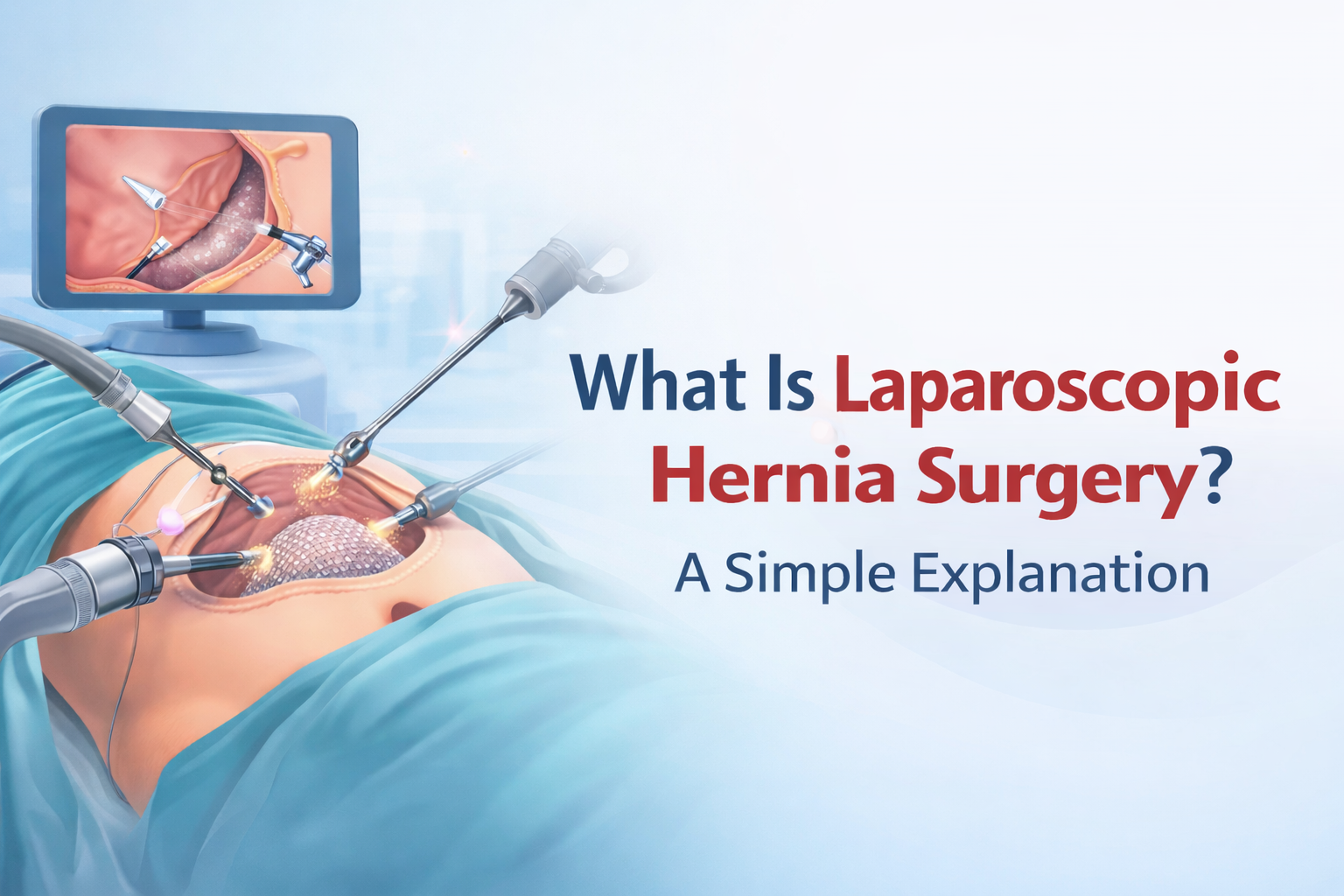
Laparoscopic hernia surgery is a minimally invasive surgical technique used to repair hernias through small cuts instead of a large incision.
In this procedure:
-
The surgeon makes 2–3 small incisions (keyhole cuts)
-
A thin camera called a laparoscope is inserted to view the inside of the abdomen
-
Specialized instruments are used to repair the hernia
-
A surgical mesh is placed to strengthen the weak muscle area
Because the surgery is performed internally with precision, damage to surrounding tissues is minimal.
Types of Hernias Treated with Laparoscopic Surgery
Laparoscopic surgery can be used to treat many types of hernias, including:
-
Inguinal hernia (groin area)
-
Umbilical hernia (near the navel)
-
Incisional hernia (after previous surgery)
-
Femoral hernia
-
Bilateral hernia (both sides)
Your surgeon at Bawa Hospital will decide the best approach based on your condition, age, and medical history.
How Is Laparoscopic Hernia Surgery Performed?
The procedure usually follows these steps:
-
The patient is given general anesthesia
-
Small incisions are made in the abdomen
-
The laparoscope provides a clear internal view on a monitor
-
The hernia is gently pushed back into place
-
A medical-grade mesh is placed to reinforce the muscle wall
-
Incisions are closed with sutures or surgical glue
The surgery typically takes 30 to 60 minutes, depending on the type of hernia.
Benefits of Laparoscopic Hernia Surgery
Compared to traditional open surgery, laparoscopic hernia repair offers several advantages:
-
Smaller incisions and minimal scarring
-
Less post-operative pain
-
Faster recovery and shorter hospital stay
-
Lower risk of infection
-
Early return to work and daily activities
-
Better cosmetic results
At Bawa Hospital, we use advanced equipment and techniques to ensure optimal outcomes and patient comfort.
Is Laparoscopic Hernia Surgery Safe?
Yes. Laparoscopic hernia surgery is considered very safe when performed by experienced surgeons. Like any surgery, there are small risks, but complications are rare and manageable.
Our surgical team follows strict safety protocols and uses high-quality mesh materials to reduce the risk of recurrence.
Recovery After Laparoscopic Hernia Surgery
Recovery is usually quick and smooth:
-
Most patients can go home the same day or next day
-
Mild pain or discomfort may be felt for a few days
-
Walking is encouraged within 24 hours
-
Normal activities can usually be resumed within 1–2 weeks
-
Heavy lifting should be avoided for a few weeks
Our doctors provide detailed post-surgery guidance to ensure safe healing.
Who Is a Good Candidate for Laparoscopic Hernia Surgery?
You may be suitable for laparoscopic hernia repair if:
-
You have a reducible hernia
-
You want faster recovery with minimal pain
-
You have bilateral or recurrent hernia
-
You are medically fit for general anesthesia
A detailed consultation at Bawa Hospital helps determine the best treatment plan for you.
Why Choose Bawa Hospital for Hernia Surgery?
At Bawa Hospital, we are committed to providing advanced surgical care with compassion and expertise. Our team of experienced surgeons, modern operation theatres, and patient-centric approach ensure high success rates and quick recovery.
We believe in clear communication, transparent treatment plans, and complete patient support—from diagnosis to recovery.
Final Thoughts
Laparoscopic hernia surgery is a modern, effective, and patient-friendly solution for hernia treatment. It offers faster healing, less pain, and better outcomes compared to traditional surgery.
If you or a loved one is experiencing hernia symptoms, early treatment can prevent complications and improve quality of life. Consult the experts at Bawa Hospital to explore safe and advanced hernia treatment options.