ਇਹ ਪੰਨਾ ਪੰਜਾਬੀ ਵਿੱਚ ਵੀ ਉਪਲਬਧ ਹੈ — ਪਾਇਲੋਨਾਈਡਲ ਸਾਈਨਸ ਬਾਰੇ ਪੰਜਾਬੀ ਵਿੱਚ ਪੜ੍ਹੋ
If the area is red, hot, badly swollen and you can hardly sit down, that is an abscess. It needs to be opened and drained, and it needs doing today, not next week. Antibiotics alone rarely settle it. Come in, or go to whichever hospital is nearest you.
What a pilonidal sinus is
Think of a small tunnel running under the skin at the top of the crease between the buttocks, just above the tailbone. That is all it is. The name comes from Latin and means a nest of hair, which is a good description of what we find inside when we open one up.
Here is how it forms. A loose hair, usually shed from your own back, ends up lying in the crease. It sits there pointing downwards. Every time you sit, stand or walk, the skin either side of the crease moves and works that hair a fraction deeper. A hair shaft is not smooth; under a microscope it has fine barbs running along it, like the teeth on a fishing hook, so it can travel in but not out. Eventually it breaks through the skin. Your body does what it does with any splinter, walls it off, and a small cavity forms. More hair follows the same route. Now you have a tunnel.
The little dimples you can sometimes see in the midline are the doorways. They are usually a couple of millimetres across, which is why people assume the problem is trivial. It rarely is. The tunnel under them is often several centimetres long, and it can branch sideways.
How it usually shows up
Three patterns, and you will probably recognise one of them.
The first is a dimple that does nothing. Someone notices it, or a partner does, and it never causes a day's trouble in a lifetime. Those can be left alone.
The second is the common one and the reason most people eventually make an appointment. Fluid leaks from the crease, on and off. It might be clear, it might be blood-stained, it often smells. It stains underwear, which is the part people find hardest to say out loud. There is a dull ache after a long drive or a full day in a chair. It settles for a few weeks, sometimes after a course of antibiotics, and then it comes back. Then it comes back again.
The third is an abscess. This one announces itself. Severe pain, a hot swelling you can feel, sometimes fever, and no comfortable way to sit. That needs draining the same day.
I can usually tell what is going on by looking. Where somebody has had two or three operations already, or where the openings are spread out over a wide area, I will ask for an ultrasound or an MRI first, because I would rather know what I am dealing with before I start than find out halfway through.
Why it happened to you
Patients ask me this constantly, usually with an edge of embarrassment, as though they have done something wrong. They have not. It comes down mostly to how you are built.
A large review published in early 2026 put numbers on the risk factors. Thick body hair roughly triples your chances. A parent or sibling who had it raises them more than fourfold. Bathing twice a week or less than that multiplies the risk by about three. Being overweight roughly doubles it, and obesity a little more. Sitting for six hours or more a day came up again and again across the individual studies, though the reviewers did not pool that one statistically.
Read that list and you can see why I see so much of this in Ludhiana. Truck drivers on the Delhi run. Boys sitting through coaching classes. Men on factory floors in June, when the humidity does the rest. It is, more than anything, a young man's condition; it usually starts somewhere between fifteen and thirty, and it is unusual after forty.
The old operation, and why it has a reputation
For most of the last century the answer was to cut the whole diseased block of tissue out, right down to the fascia over the sacrum, and leave the wound open to fill in from the bottom up.
It works. It is also brutal. On average it takes about two months to heal, and the reported range runs from four weeks at the fast end to six months at the slow one. Somebody has to change the dressing regularly for all of that time. Even then it comes back in 8 to 21 out of every 100 people.
Stitching the wound closed down the middle sounds like the obvious improvement. It is not. Healing fails in around 16 per cent, and recurrence has been reported as high as 38 per cent, because a midline scar sits precisely where friction, sweat and hair all meet. Most surgeons abandoned it years ago.
What did work was moving the scar off the midline. The flap operations, Karydakis and the cleft lift and Limberg, flatten the crease and put the scar to one side. In experienced hands these are excellent, with recurrence around 1.3 per cent for Karydakis and 3.3 per cent for cleft closure. The cost is a bigger operation, tissue moved about, and a longer scar you can see.
There is one thing I want to be blunt about. Having an abscess drained and then hoping is not treatment. Up to 85 out of 100 people who have drainage and nothing else end up needing further surgery later on.
What laser closure does
The technique goes by the initials SiLaC, sinus laser closure, and it approaches the problem from the opposite direction. Instead of cutting out the tissue around the tunnel, we destroy the tunnel's lining from the inside and let it collapse.
In practice there are three parts to it.
First we clear out the tunnel: the hair, the debris, the infected granulation tissue. More and more of us now do this with a fistuloscope, a fine telescope about three by five millimetres, so the cavity appears on a monitor while saline washes it out. The advantage is straightforward. You can see what you are removing instead of guessing at it. In one published series, side branches that were invisible from the outside turned up in nearly one patient in ten.
Then the laser. A thin fibre goes in to the far end of the tunnel. It emits sideways, all the way round, rather than forwards, and it is withdrawn slowly, roughly a millimetre a second, at about ten watts. The heat destroys the lining so that the tunnel shrinks and seals. Because the energy stays in the tunnel wall, the healthy tissue around it and the skin above are largely left alone.
Finally the pits themselves are cut out. Each is a few millimetres. They are left to heal on their own. No large wound, no flap, no packing.
The whole thing takes between ten and twenty-five minutes depending on whether the telescope is used. It can be done under local anaesthetic, spinal, or a general; in one series the split was roughly four in ten local, three in ten spinal and a quarter general. Almost everybody goes home the same day.
What the results look like
This is where I would rather disappoint you now than later.
Laser closure is a newer operation. The published work is mostly single-centre, and the patients have not been followed for as long as they have with the flap operations it competes with. The results are good. They are not as uniformly good as the marketing on some websites suggests.
| Outcome | 200 patients, 2019 | 83 patients with telescope, 2025 |
|---|---|---|
| Healed at first attempt | 94 per cent | 95 per cent by three weeks |
| Average time to heal | 19.5 days | 17.3 days |
| Time in theatre | 9.4 minutes | 25 minutes |
| Pain the next day | painkillers for 4.7 days | 1.2 out of 10 |
| Back at work | not reported | 92 per cent within a day |
| Infection | 9.5 per cent | 1.2 per cent, all minor |
| Came back | 14.9 per cent, longer follow-up | 3.6 per cent, minimum six months |
Two things are worth pulling out of that table. The recurrence figures are 3.6 per cent and 14.9 per cent, and the follow-up periods behind them are very different. Pilonidal disease has a habit of returning late rather than early, so a series followed for six months will always flatter itself against one followed for five years. If a clinic quotes you a single low percentage, ask over what period it was measured.
The other thing is that both of those studies are among the more favourable in the literature. A systematic review published in 2026 pooled everything that had been printed and came out at roughly 30 days to heal for laser on its own, 27 days when the telescope is used, cure rates of 86 and 88 per cent, and recurrence of 11 and 9 per cent. Those are the numbers I would plan around.
If a clinic quotes you a single low percentage, ask over what period it was measured.
And on the telescope: I use it, and I think seeing the side branches is worth doing. But that same 2026 review found no proven advantage for adding it, while noting that the equipment and the training cost more. I would rather tell you that than pretend the evidence is settled when it is not.
Who it suits, and who it does not
It is a good operation for a long-standing sinus with tunnels that can be entered and cleaned; for many sinuses that have come back after pit picking or some other limited procedure; for people who cannot afford to be off work for weeks, which in my clinic is most of them; and for anyone who does not want a large wound or a flap scar.
It is the wrong first move if you have an abscess right now, which needs draining before anything else. It is also the wrong choice where the disease has spread into broad cavities rather than discrete tunnels, or where several previous operations have left the whole area scarred. In those cases a flap will usually serve you better, and I will say so.
There is one argument for laser that I think gets underrated. It removes so little tissue that if it fails, everything else is still available. You can have it again, or you can have a flap. A failed flap does not leave you with the same room to manoeuvre. Starting with the least destructive operation that will actually do the job is a reasonable way to think about this, provided the operation is genuinely adequate for what you have.
For extensive or repeatedly recurrent disease, a well-performed flap still has the better long-term record. For a straightforward chronic sinus in someone who needs to be back at work this week, laser is usually the better bargain. Anyone who tells you one operation is right for every patient is describing their own practice, not your disease.
Afterwards
You will go home the same day. Expect soreness rather than pain, and expect a small amount of discharge from the pit sites for one to three weeks as the tunnel drains and closes. That is normal and not a sign of failure, though patients ring me about it more than anything else.
Shower rather than soak. Pat the area dry. Get up and walk for a few minutes every hour if you sit for a living. Then there is the question of hair.
You will read everywhere that shaving the area prevents recurrence. I used to say it myself. The evidence has not held up. The 2019 American guideline says hair removal may be used and grades the evidence as low quality. The 2024 European guideline went further and concluded it is not necessary to reduce recurrence. Worse, repeated razor shaving of the healed area has been associated with more recurrence, not less. Laser hair reduction has the better evidence of the available methods. So the honest advice is that this deserves a specific conversation with your own surgeon, not a rule copied off a website.
What is not in dispute: keep it clean and dry, break up long stretches of sitting, and keep your weight in a sensible range. For the full week-by-week version, including when you can drive and when you can go back to the gym, see our guide to recovery after pilonidal sinus surgery.
- Pain that gets worse after the third day rather than better
- Redness spreading outwards from the wound
- Fever or chills
- Discharge that turns thick, yellow-green or foul
- Bleeding that soaks a dressing
- A new tender lump
- A pit still leaking at three weeks
What to ask any surgeon
Including me. These five questions will tell you a great deal about whether you are in the right place.
- Have you examined the extent of it, and do I need a scan first?
- Will you clean the tunnel with a telescope, or use the laser alone?
- What is your own recurrence rate, and over how long a follow-up?
- If this does not work, what would we do next?
- What exactly does the quoted price cover?
A surgeon who only performs one of these operations can only recommend one of them. That is worth keeping in mind wherever you go. If cost is the sticking point, we have written separately about what pilonidal surgery costs in India and about the insurance clause that catches people out. If you are still weighing up the operations themselves, there is a fuller comparison of laser against open and flap surgery.
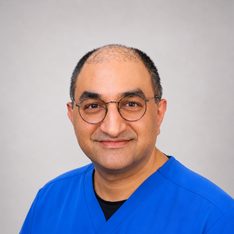
About the author
Prof. (Dr.) Ashvind Bawa, MS, FACS, is Director of Surgical Services at Bawa Hospital & Hernia Institute in Ludhiana, where he practises general and laparoscopic surgery. He writes these guides himself and reviews them at least once a year against the current literature.
- What pilonidal surgery costs in India, and the nine things that move the priceIncluding the day-care clause in health policies that catches people out after admission
- Recovery, week by weekSitting, driving, the gym, swimming, and the six signs that mean pick up the phone
- Laser, open surgery or a flap? Comparing all five operationsWhat actually decides it, and why the published numbers disagree with each other
- Dessily M, et al. The SiLaC procedure for pilonidal sinus disease: long-term outcomes of a single institution prospective study. Techniques in Coloproctology 2019;23(12):1133–1140.
- SiLaC with EPSiT: early outcomes of laser-endoscopic therapy for pilonidal sinus disease. Frontiers in Surgery, 2025.
- Laser-assisted treatment of pilonidal sinus disease: a systematic review and meta-analysis. Langenbeck's Archives of Surgery, 2026.
- Risk factors for sacrococcygeal pilonidal sinus: a systematic review and meta-analysis supplemented by genetic causal assessment. Frontiers in Surgery 2026;12:1718589.
- American Society of Colon and Rectal Surgeons. Clinical practice guidelines for the management of pilonidal disease. Diseases of the Colon & Rectum, 2019.
- European Society of Coloproctology guideline on the management of pilonidal disease. British Journal of Surgery, 2024.
- Petersen S, et al. Long-term effects of postoperative razor epilation in pilonidal sinus disease. Diseases of the Colon & Rectum, 2009.
This page is general information. It is not a substitute for being examined, and it cannot tell you what will happen in your case. Pilonidal disease varies a great deal between individuals and the right operation depends on findings that can only be assessed in person. Every figure quoted here describes groups of patients in published studies. If you have severe pain, a fever, or a swelling that is getting rapidly worse, seek medical help today.